Published · November 23, 2026 Event · Wednesday, 16 April 1947 · 9:12 a.m. CST Place · Port of Texas City, Texas Read · 14 min
At least 581 lost
2 ships, 16 hours apart
1.62 miles — the anchor’s flight
73 years later, it happened again
How does a shipload of fertilizer flatten a city?
On the 16th of April 1947, at 9:12 in the morning, a French freighter exploded in the harbour at Texas City, Texas — and at least 581 people died, because of a fire in a hold, a sealed hatch, and a cargo everyone thought was harmless.

The port and the ship
Texas City was a boomtown on Galveston Bay, about 40 miles south-east of Houston and 11 miles north-west of Galveston — a deep-water port that had grown fast on oil and chemicals during the war. In 1946 some 4,000 ships loaded or unloaded there. The nearest neighbourhood was only half a mile from the docks; within a mile of the explosion site there were six major chemical or oil companies, nine piers, eleven warehouses, a grain elevator and many homes.
On the 11th of April, the French freighter SS Grandcamp arrived from Houston — a 437-foot Liberty ship, built in Los Angeles in 1942 as the SS Benjamin R. Curtis, assigned after the war to the French Line. She was loading ammonium nitrate for farmers in France, to rebuild post-war Europe. About 2,300 tons went aboard in hundred-pound paper sacks, warm to the touch as they were loaded. The last 600 tons were still to go into the partly full Hold 4 on the morning of the 16th. Her engine was under repair while she was docked, so the ship could not move.
Nobody handling the sacks was told what ammonium nitrate really is. The Department of Agriculture said fertilizer was not dangerous under typical conditions; Army manuals called the same chemical a high explosive. Nobody in authority resolved the contradiction. The sacks were coated in paraffin wax to stop them caking — wax is fuel, and the nitrate supplies its own oxygen. Together, an explosive waiting for heat.
Houston had already banned the loading of fertilizer in 1946. Texas City had not. And no disaster preparedness plan existed — not the port, not the Texas City Terminal Railway, not the city, not any of the oil refineries. There was no port authority that could regulate both land and sea operations, so safety was fragmented between companies and between land and sea. Wartime military supervision had ended, and the Coast Guard had not taken over.
The fire
On Wednesday the 16th, at about eight in the morning, smoke was spotted in Hold 4. Longshoremen tried a gallon jug of water and two fire extinguishers; neither had any effect, and the hold filled with smoke. They were ordered out.
The captain made the decision that doomed the ship: no water — it would ruin the cargo. Instead, seal the hatches, and pump steam into the hold to smother the fire.
But steam cannot smother a fire in ammonium nitrate. The chemical makes its own oxygen, so smothering does not work. The steam only added heat — and may have converted ammonium nitrate to nitrous oxide, making the fire worse.
At 8:37, a call went out for help, and the Texas City volunteer fire department came, with a team from the Republic Oil Refining Company. The port had fire hydrants but no fire engines of its own.
The steam pressure blew the hatch off Hold 4, and a column of yellow-orange smoke poured out — the colour of nitrogen dioxide fumes. About 500 spectators, children among them, walked down to the shoreline to watch, believing they were at a safe distance. Historian Hugh Stephens records that few residents understood the danger: before the accident, Texas City’s citizens felt secure because such a disaster had never happened, and they could therefore assume it never would.
A local priest, Father William F. Roach, had said the town felt like it was sitting on a keg of dynamite. He drove to the waterfront to help after seeing the smoke — and was killed there.
9:12
At 9:12, the heat split the fuel-oil bunker beside the hold, and fuel oil poured onto the hot, decomposing fertilizer — fuel and oxidizer, the same combination as an explosive. The Grandcamp detonated.
The ship was entirely obliterated. The blast caused utter destruction within 2,000 feet and blew almost 6,350 tons of the ship’s steel into the air, some of it faster than sound. Her cargo was launched 2,000 to 3,000 feet into the sky, and a mushroom cloud rose about 2,000 feet. A wave fifteen feet high swept the dock area — detectable nearly 100 miles off the Texas shoreline — and was responsible for a significant portion of the onlooker deaths.
The blast was heard 150 miles away and tremors were felt 250 miles away. Half the windows in Galveston, eight miles off, shattered; windows were shattered within a 10-mile radius. Two sightseeing airplanes flying nearby were blown out of the sky.
The Grandcamp‘s two-ton anchor was hurled 1.62 miles and found in a crater ten feet deep. Her other main anchor, five tons, was hurled half a mile to the entrance of the Texas City Dike. The 150-foot Longhorn oil barge was lifted into the air and landed 100 feet away on the shore.
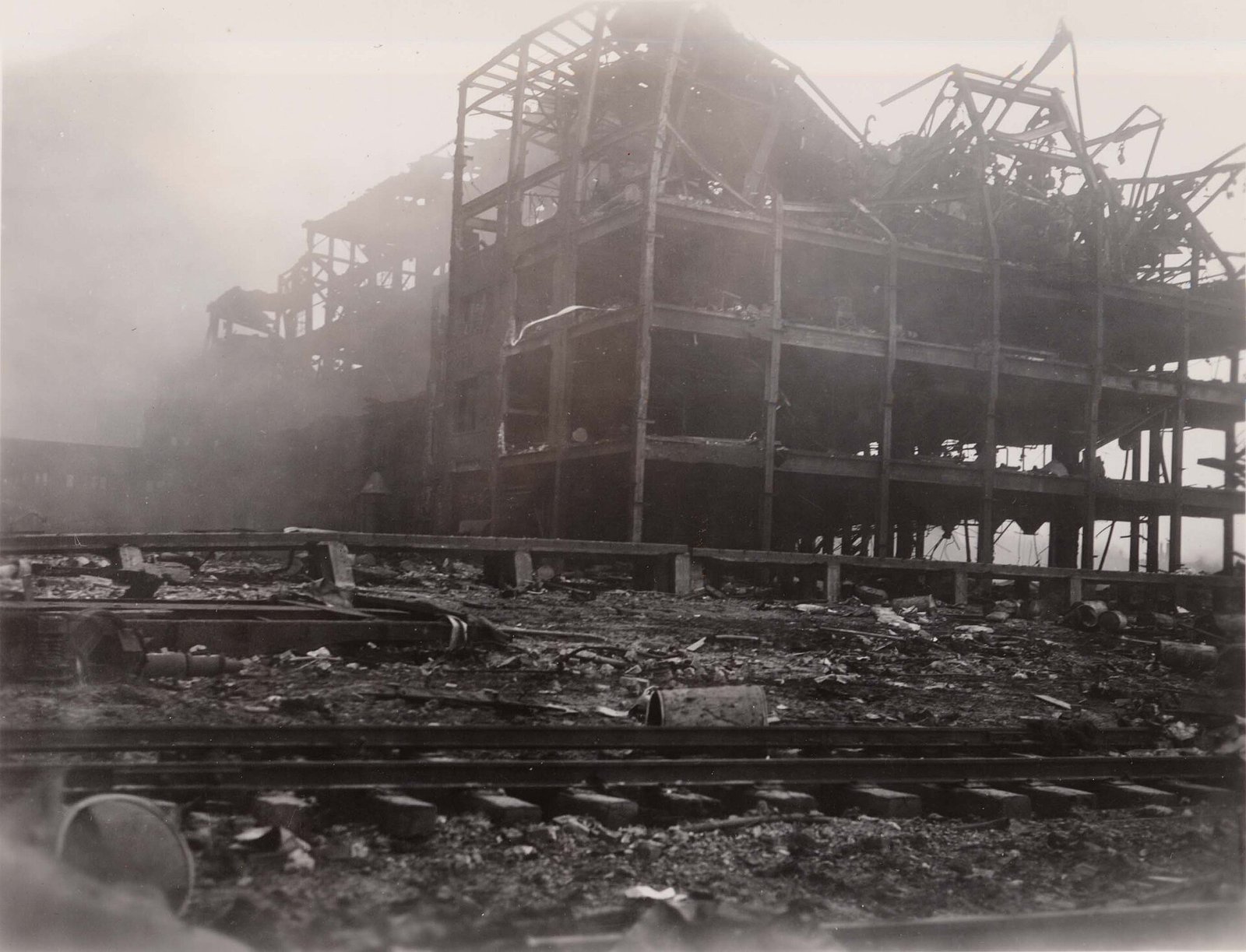
The Monsanto Chemical Company, adjacent to the slip where Grandcamp was docked, took the brunt of the first explosion. Of its 574 employees and contractors, 234 were killed and 200 more injured. Every man of the Monsanto firefighting team, laying hose reels opposite Grandcamp, was killed. The $15 million plant, built in 1942 to produce synthetic rubber for the war effort, was destroyed.
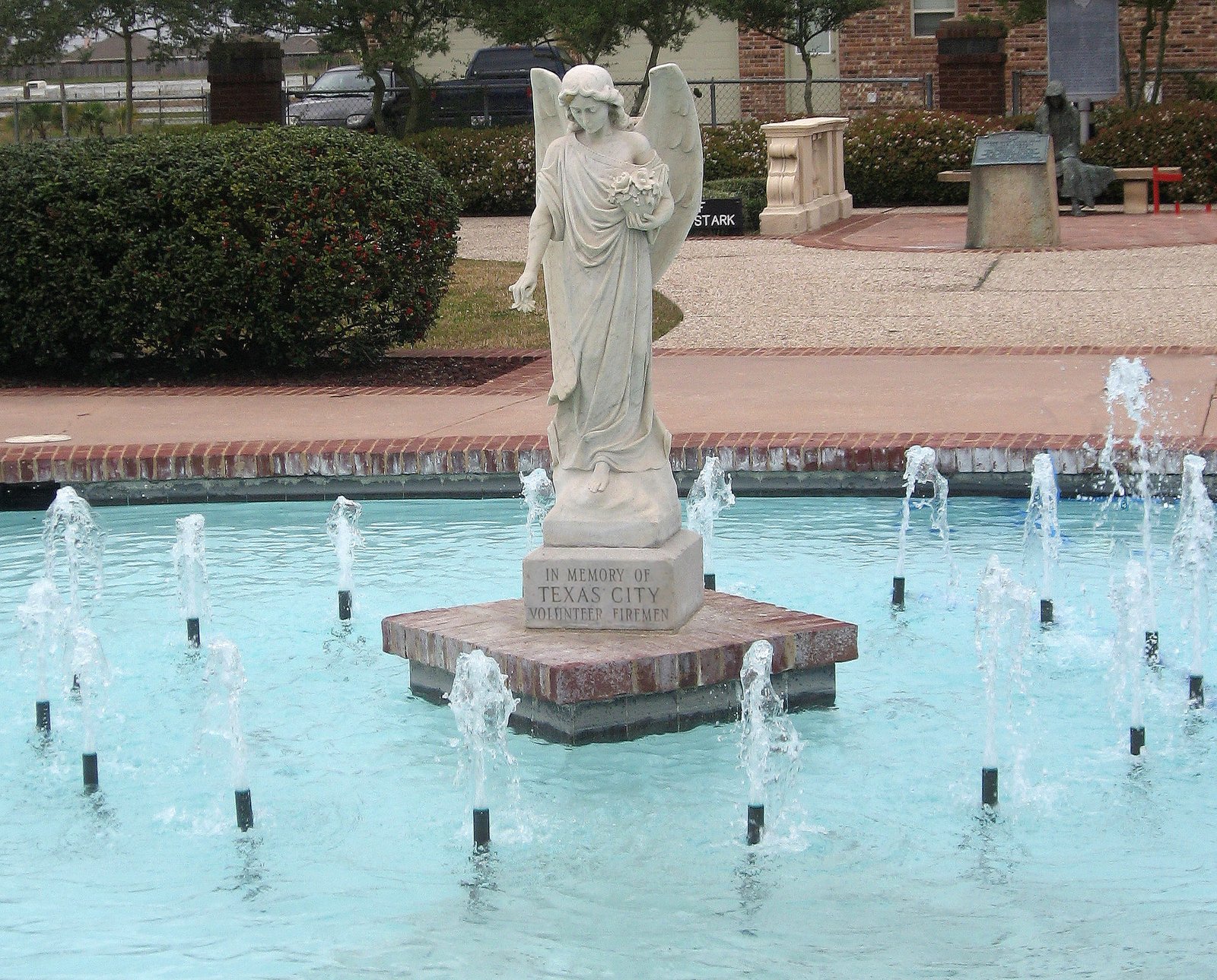
The city’s volunteer fire department — 27 of its 28 men — died in the first explosion while fighting the shipboard fire. Three of the four Texas City Heights volunteer firemen on the docks were also killed. All four of the city’s fire engines were left as twisted, burned husks. One Texas City firefighter, Fred Dowdy, had not responded to the initial call; he coordinated the firefighters arriving from communities up to 60 miles away, eventually 200 of them, from as far as Los Angeles.
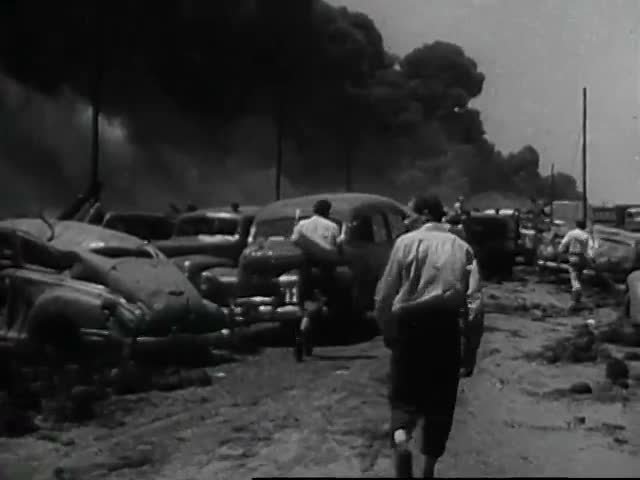
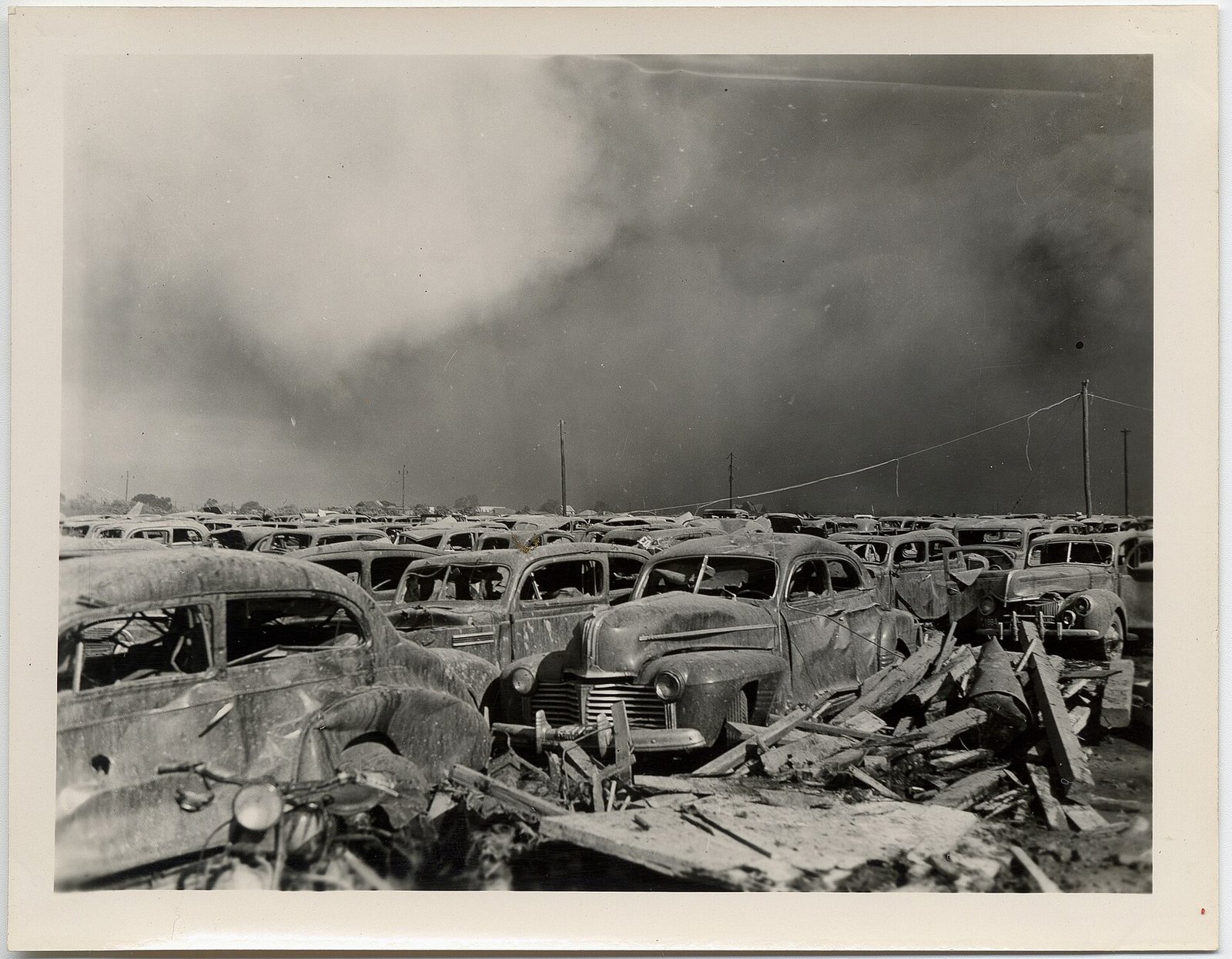
Nearly 1,000 buildings were levelled, and more than 5,000 people were injured — yet 112 people within 500 feet of the ship survived, some as close as 70 feet from the dock.
The second ship
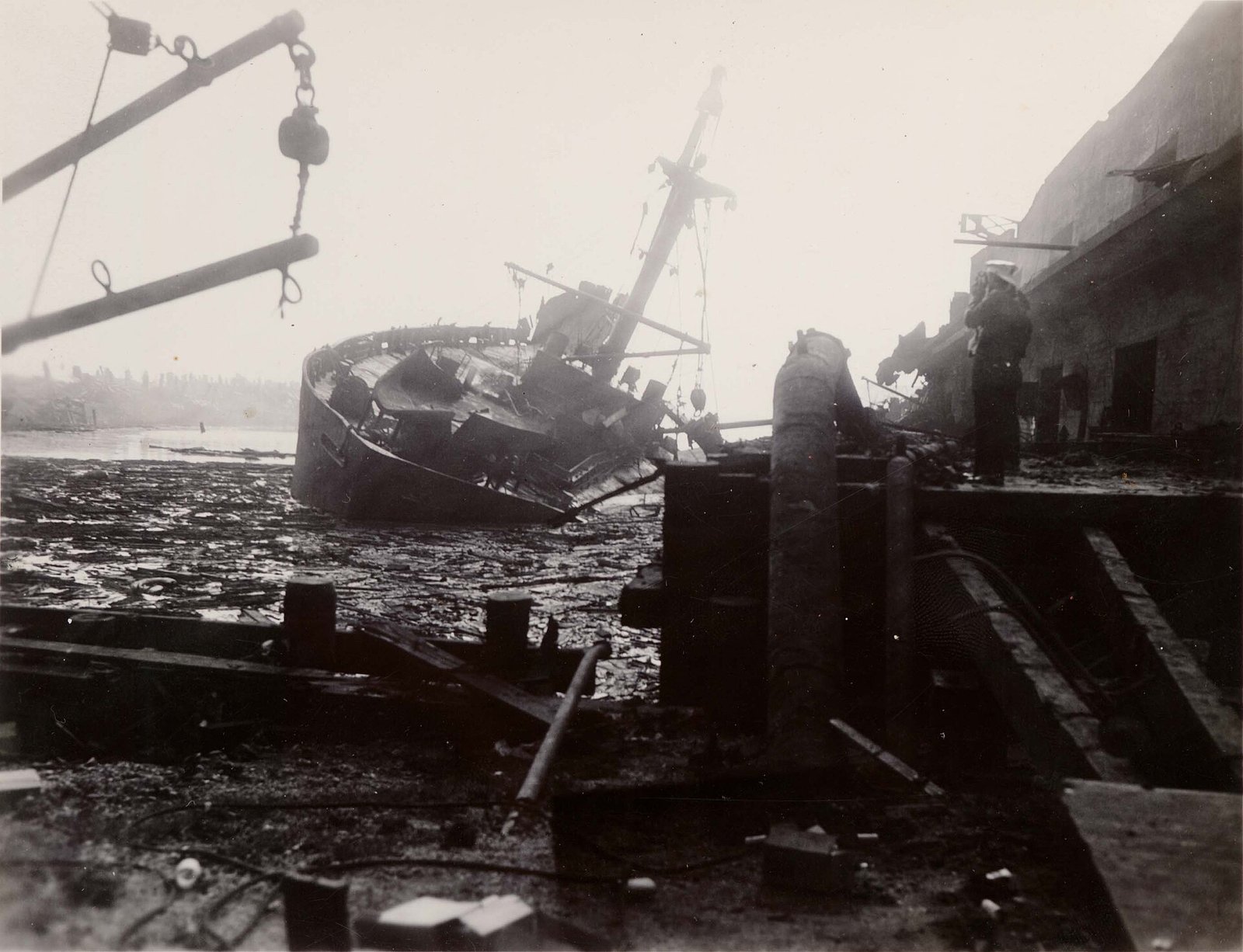
Six hundred feet away, a second ship was also loaded with ammonium nitrate — the High Flyer, 961 tons of it, plus 2,000 tons of sulfur. The first blast tore her from her moorings, and she drifted across the harbour against the Wilson B. Keene.
That afternoon, two men boarded her and found her cargo ablaze. They reported it — and the warning went unheeded for hours. Around eleven that night, tugs from Galveston tried to pull her away. They cut her anchor, still could not move her, and at about one in the morning they fled.
Ten minutes later, at 1:10 a.m., the High Flyer exploded — witnesses said more powerful than the first. Two more people were killed, and the Wilson B. Keene was destroyed. Her steel frame had been heated until glowing, and chunks of it rained down on Texas City, setting mass fires. One of her propellers was blown off and found nearly a mile inland; it now stands in the memorial park near Grandcamp‘s anchor.
The aftermath and the law
The fires burned for a week; recovering the bodies took nearly a month. The dead numbered at least 581 — 405 identified, 63 never identified, 113 never found. More than 800 people were left orphaned or widowed. More than 500 homes were destroyed and hundreds damaged, leaving 2,000 homeless. Over 1,100 vehicles were damaged and 362 freight cars obliterated. Property damage was estimated at $100 million in 1947 — about $1.1 billion in today’s terms — and a further $500 million of oil products burned.
On the 22nd of June 1947, a burial service was held for the 63 unidentified victims: 63 caskets, brought from Camp Wallace by hearses from 51 funeral homes in 28 cities, in a procession estimated at 5,000 people. Catholic and Protestant clergy and a rabbi took part.
The survivors sued — the first class action ever brought against the United States government, 8,485 plaintiffs under the Federal Tort Claims Act, passed the year before. A district court found the government responsible in April 1950; an appeals court reversed it in June 1952. In June 1953, the Supreme Court ruled, four to three, that the government could not be sued at all — the decisions that led to the disaster were policy, and policy cannot be sued.
Congress stepped in. A special act in 1955 paid out nearly $17 million to 1,394 families.
The chain — eight links
1. The cargo — fertilizer that was also an explosive
Fertilizer-grade ammonium nitrate, made from surplus wartime explosives production, was coated in paraffin wax to stop it caking. The wax was fuel; the nitrate was oxidizer. Together they were an explosive waiting for heat — and nobody handling it was told that. The Department of Agriculture’s guidance said fertilizer was not dangerous; Army manuals said the same chemical was a high explosive. Nobody in authority resolved the contradiction.
Source: Wikipedia, citing Stephens; NOAA; IChemE
2. A port with no safety authority
Texas City was a wartime boomtown that had grown faster than its rules. There was no port authority, no disaster plan, and no single body responsible for safety on the docks. Wartime military supervision had ended and the Coast Guard had not taken over. Houston had already banned ammonium nitrate loading in 1946; Texas City had not.
Source: Wikipedia, citing Stephens
3. The warm bags and the fire nobody could explain
Longshoremen reported the ammonium nitrate sacks were warm to the touch as they were loaded. The cause of the fire in Hold 4 was never determined. The likeliest explanation is a cigarette discarded the day before, the cargo smouldering through the night — but that is a theory, not a proven fact.
Source: Wikipedia; NOAA
4. The sealed hold and the steam
When smoke was found in Hold 4, the captain ordered no water to be used, for fear of ruining the cargo. Instead he ordered the hatches sealed and the hold filled with steam, to smother the fire. Steam cannot smother an oxidizer fire — ammonium nitrate supplies its own oxygen. The steam only added heat, and may have converted ammonium nitrate to nitrous oxide, making the fire worse.
Source: Wikipedia, citing Stephens and the USCG report; NOAA
5. The crowd that came to watch
The fire and its strange yellow-orange smoke drew about 500 spectators, including many children, to the shoreline. They believed they were at a safe distance. Few residents understood the danger — such a disaster had never happened, so they assumed it never could.
Source: Wikipedia, citing Stephens
6. The fuel-oil bunker
The likeliest explanation for the detonation itself is that the heat of the fire split the fuel-oil bunker between Hold 3 and Hold 4, pouring fuel oil onto the hot, decomposing fertilizer — an impromptu mixture of fuel and oxidizer, the same combination as ANFO explosive. At 9:12 a.m. it reached the threshold and detonated.
Source: Wikipedia, citing Stephens
7. The second ship
SS High Flyer, 600 feet away, also carried ammonium nitrate (961 tons) and sulfur (2,000 tons). The first blast tore her from her moorings and she drifted across the harbour against SS Wilson B. Keene. In the afternoon two men boarded her, found her cargo ablaze, and reported it — but the warning went unheeded for hours. Tugs tried to pull her away only around 11 p.m., cut her anchor, and still could not move her. At 1:10 a.m. she exploded; witnesses said the second blast was more powerful than the first.
Source: Wikipedia, citing Stephens; TSHA
8. The regulatory vacuum
There were no rules for the stowage, handling or labelling of ammonium nitrate at the time. The official report that followed recommended improved containers, labelling and special handling of ammonium nitrate fertilizer, prohibiting smoking on all piers and docks at all times, and worst-case community disaster plans — all things that did not exist on 16 April 1947.
Source: TSHA; official report
The legacy
The disaster brought changes in chemical manufacturing and new regulations for the bagging, handling and shipping of chemicals. The official report recommended improved containers, labelling and special handling of ammonium nitrate fertilizer, prohibiting smoking on all piers and docks at all times, and worst-case community disaster plans to coordinate relief agencies, police, fire departments, hospitals, doctors and nurses, and civil and military authorities.
The law changed too. Dalehite is still the leading case on the Federal Tort Claims Act’s “discretionary function” exception — the decision that the government cannot be sued for policy-level decisions, however negligent. It is cited in every textbook treatment of government immunity. And the disaster is cited in the history of the Occupational Safety and Health Act of 1970, among the workplace tragedies that led to federal workplace-safety law.
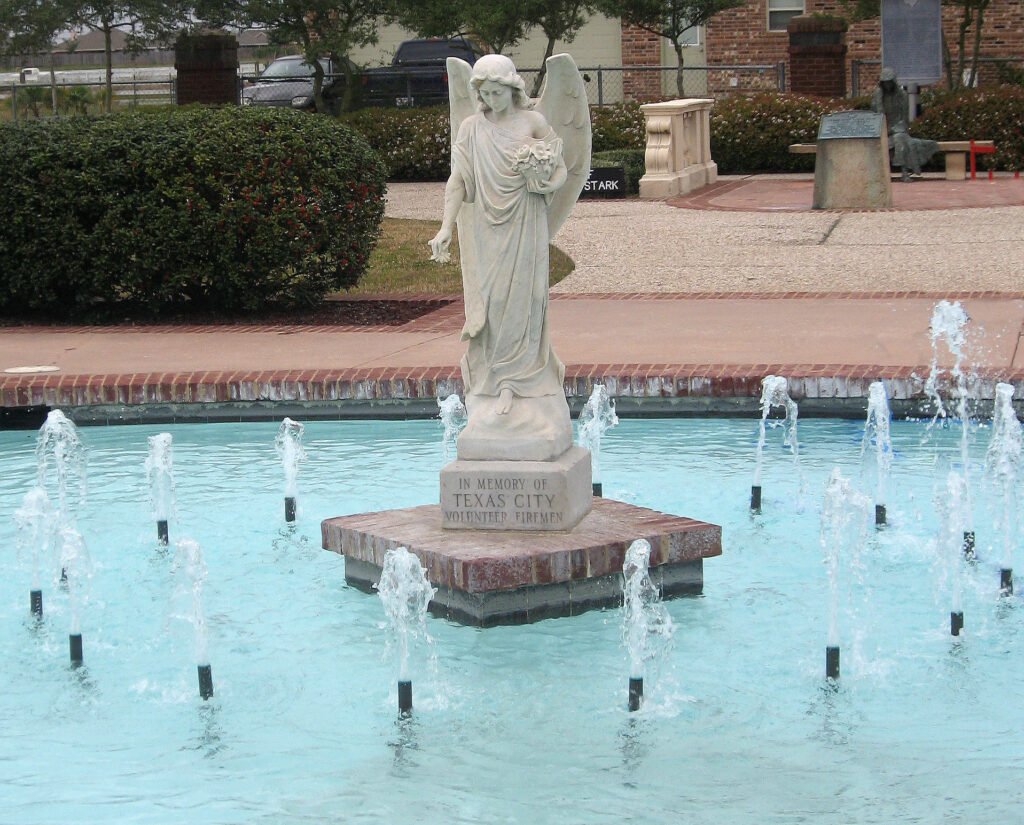
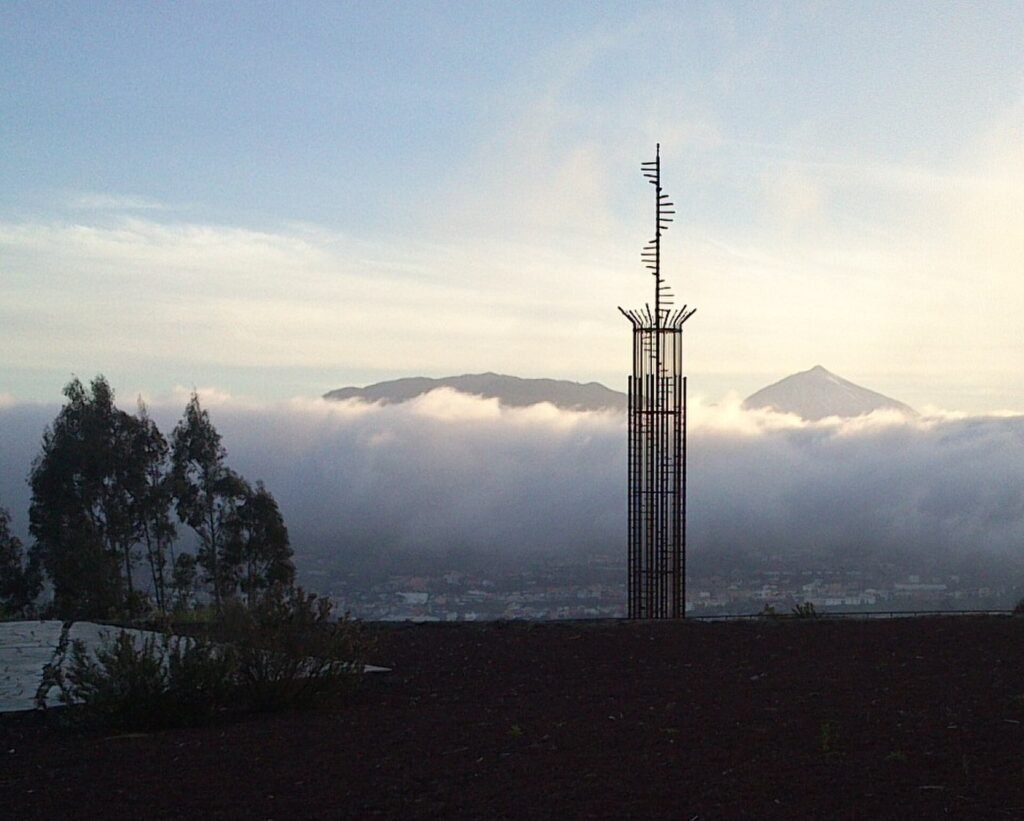
The 63 unidentified victims are buried in numbered graves at Texas City Memorial Park, where Grandcamp‘s two-ton anchor and High Flyer‘s propeller stand, with memorials for the volunteer firemen, the crew of Grandcamp, and a list of the known victims. The anchor became a memorial in 1962; the park was rededicated in 1991; a “Grief” statue was added on 16 April 2000. The five-ton anchor stands on a Texas-shaped memorial at the entrance to the Texas City Dike. For the 50th anniversary in 1997 the city commissioned the “Phoenix Fountain” — a 12-foot steel sculpture symbolising resurrection from the ashes.
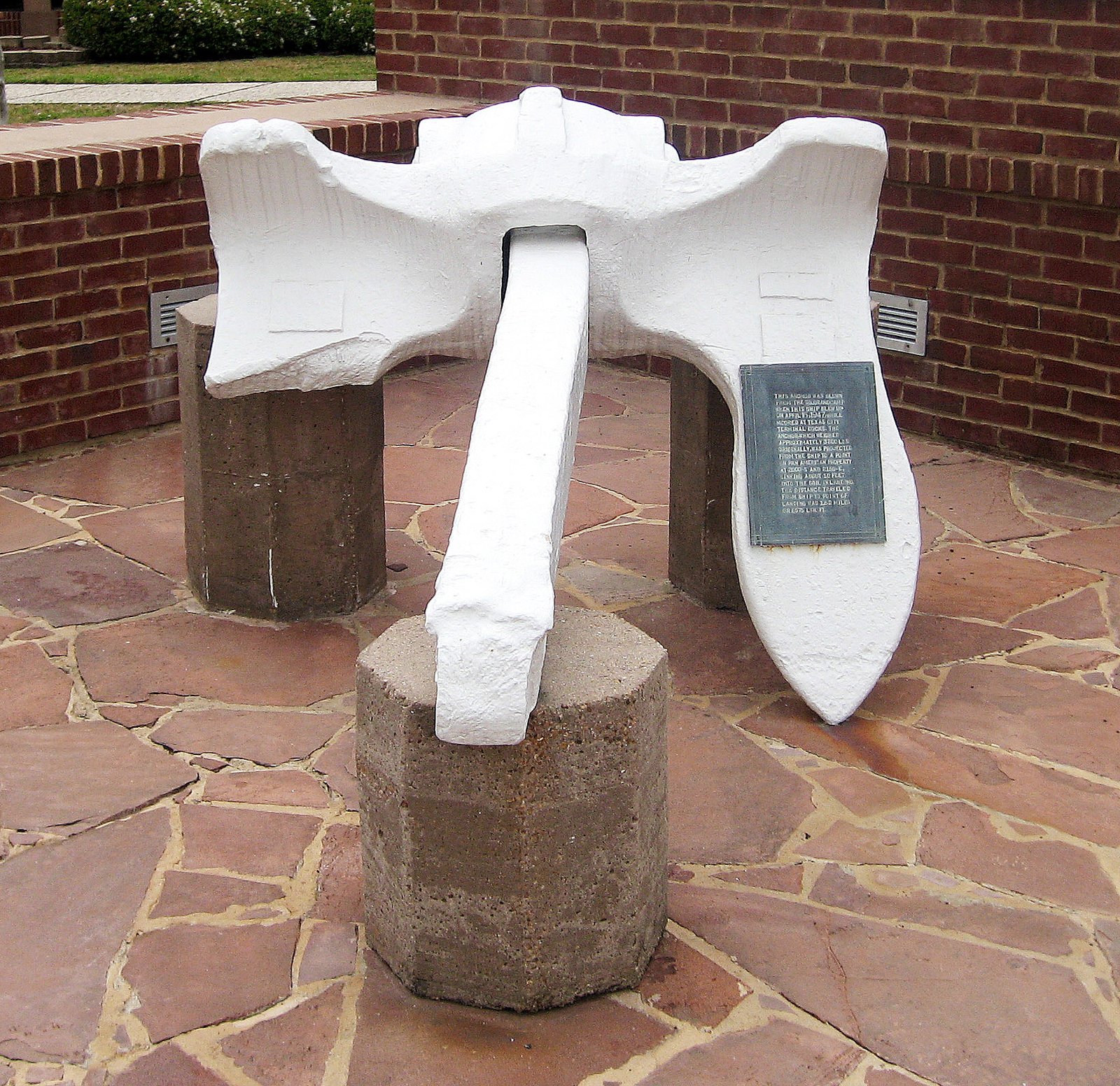
The 63 who were never identified are buried in numbered graves at Texas City Memorial Park, where the Grandcamp‘s anchor still stands — two tons of steel that flew a mile and a half through the air.
Texas City was supposed to be the lesson. But 73 years later, the same chemical did the same thing again: on the 4th of August 2020, 2,750 tonnes of ammonium nitrate stored for six years in a warehouse at the Port of Beirut exploded — at least 218 killed, more than 7,000 injured, 300,000 driven from their homes.
The cargo was different. The mistake was the same.
Note: no footage of the detonation itself exists. The 1947 newsreel footage in the film shows the aftermath only, and no audio record of the day exists. The cause of the fire in Hold 4 was never determined. Where the records disagree — the death toll (581 against 567, 576 and 587), the Monsanto deaths (234 against 145 and 227), the firemen killed (27 against 26), and the property damage ($100 million against $67 million) — this article uses the figures in the main text and records the alternatives here. No footage is presented as the explosion itself.
Sources and credits
- Wikipedia — Texas City disaster: https://en.wikipedia.org/wiki/Texas_City_disaster
- Texas State Historical Association, Handbook of Texas — Texas City Disaster: https://www.tshaonline.org/handbook/entries/texas-city-disaster
- NOAA, Office of Response and Restoration — “56 years after Gruesome Chemical Catastrophe, Science Prevented Second Texas City Disaster”: https://response.restoration.noaa.gov/node/420
- US Coast Guard Board of Investigation (1947) — Record of Proceedings of Board of Investigation Inquiring into Losses by Fires and Explosions of the French Steamship Grandcamp and U.S. Steamships Highflyer and Wilson B. Keene at Texas City, Texas, 16 and 17 April 1947 (OCLC 6235045)
- Dalehite v. United States, 346 U.S. 15 (1953), via Justia: https://supreme.justia.com/cases/federal/us/346/15/
- CDC/NIOSH — “The OSH Act — A Response to Workplace Tragedies”: https://www.cdc.gov/niosh/bulletin/2021/historical-disasters.html
- Institution of Chemical Engineers, Loss Prevention Bulletin 284 (April 2022): https://www.icheme.org/media/18191/lpb284_pg11.pdf
- Fire Engineering — “The Texas City Disaster”: https://www.fireengineering.com/firefighting/the-texas-city-disaster/
- Historical Marker Database — S.S. Grandcamp Anchor marker: https://www.hmdb.org/m.asp?m=50168
- University of Houston Libraries — Texas City Disaster Photographs collection: https://findingaids.lib.uh.edu/repositories/2/resources/3
- IAFF Local 1259 — “The 1947 Texas City Disaster”: https://www.local1259iaff.org/disaster.html
- Wikipedia — 2020 Beirut explosion: https://en.wikipedia.org/wiki/2020_Beirut_explosion
- Photo credits: Grandcamp anchor photo and Texas City Disaster Firemen Memorial photo CC BY-SA 4.0 by Jim Evans; wrecked SS Wilson B. Keene, destroyed Monsanto rubber factory and parking-lot wreckage photos public domain, University of Houston Libraries, Special Collections; 1947 newsreel footage public domain, Prelinger Archives / Universal-International Newsreel.